



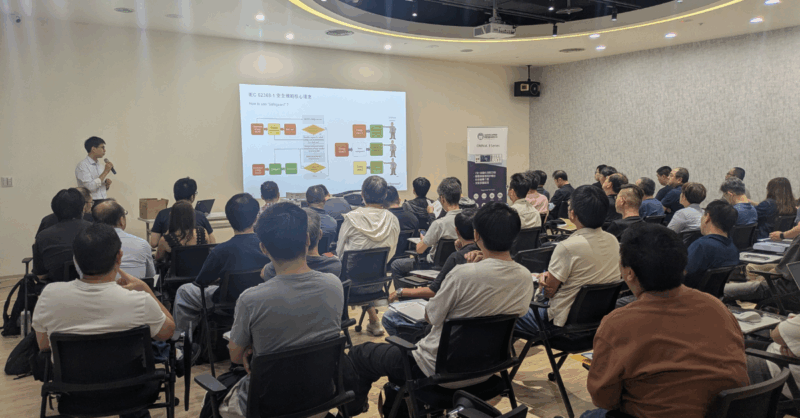
IEC 62368 compliance testing covers Hipot, Insulation Resistance, Ground Bond, and Line Leakage Current testing — core requirements as AI servers and data center hardware push power densities higher. On May 29, 2026, Ikonix Taiwan and TÜV Rheinland hosted a seminar on IEC 62368 applications, Hazard-Based Safety Engineering (HBSE), and practical testing solutions for high-density electronics.
Why IEC 62368 Matters for AI Server Hardware

As next-generation electronic devices grow more complex, higher power densities in AI servers and data center architectures are rapidly shifting global safety and compliance baselines. TÜV Rheinland technical experts led dedicated sessions analyzing the unique challenges of Hipot testing for modern AI server applications, alongside core Hazard-Based Safety Engineering (HBSE) principles — a framework focused on identifying and mitigating energy hazards at the design stage rather than only at final testing.
On May 29, 2026, Ikonix Taiwan hosted an educational seminar alongside TÜV Rheinland focused on IEC 62368 compliance testing and how Associated Research products address common customer compliance challenges. The session covered deep technical insight into core safety testing areas: Dielectric Withstand Voltage (Hipot), Insulation Resistance, Ground Bond, and Line Leakage Current testing.
From Regulatory Overview to Practical Solutions
Following the regulatory overview, Associated Research’s efficient safety testing solutions were introduced. Designed to meet and exceed applicable international standards, these solutions enable IEC 62368 compliance testing that is simpler, faster, and safer, directly helping manufacturers optimize production line productivity while maintaining uncompromising compliance and product quality.
During the session, technical specialists highlighted common challenges frequently encountered on customer production lines—many of which were directly mirrored in the core pain points shared by the participants themselves. To address these operational hurdles, the presentation delivered practical, effective solutions tailored to specific high-density IEC 62368 compliance testing requirements. Furthermore, several successful case studies demonstrated how these automated solutions are implemented in real-world applications, helping manufacturers overcome production bottlenecks, minimize operator error, and achieve stringent compliance objectives. These practical examples provided participants with clear, actionable insights into resolving their own testing vulnerabilities.
High Attendance and Industry-Wide Engagement
The event drew significant attendance from prominent technology leaders, electronic hardware manufacturers, and independent validation bodies across the region, reflecting a high market demand for advanced IEC 62368 compliance testing knowledge. Representatives from reputable organizations spanning industrial computing, power management, cloud infrastructure, and national safety testing laboratories participated actively in the day’s sessions—including Asia Vital Components Co., Ltd. (奇鋐科技股份有限公司), Industrial Technology Research Institute (工業技術研究院), Advanced Energy (香港商雅是達電子有限公司台灣分公司), and LITE-ON Technology Corporation (光寶科技股份有限公司)—reinforcing the critical relevance of the seminar’s focus areas.
Driving Proactive Compliance on the Production Line
To satisfy strict IEC 62368 requirements, manufacturers must transition away from legacy, reactive testing methodologies and embrace proactive engineering frameworks that identify potential energy hazards before they reach the end-user. By utilizing modern safety testing instrumentation that automates data logging, companies can minimize operator error during high-voltage stress testing and ensure grounding circuits possess low enough resistance to safely divert fault currents. A comprehensive IEC 62368 compliance testing strategy helps manufacturers verify these critical safety requirements consistently throughout production.
With the successful conclusion of the seminar, Associated Research and TÜV Rheinland reaffirm their commitment to supporting the engineering community with the knowledge, instrumentation, and automated testing methodologies necessary to build a safer, more reliable foundation for next-generation technology. If your team is preparing a new product architecture for evaluation, you can review our technical resources or look through our comprehensive line of electrical safety compliance testers to find the right instrumentation for your production environment.
About Associated Research
Since 1936, Associated Research has been a pioneer in the electrical safety compliance industry. From creating the first battery-operated Megohmmeter in the U.S. to developing foundational AC Hypot testing instruments, Associated Research has spent 90 years driving product innovation.
About TÜV Rheinland
TÜV Rheinland is a globally leading independent provider of testing, inspection, and certification services with a legacy spanning over 150 years. Employing more than 28,000 professionals across 50+ countries, the organization ensures quality, safety, and sustainability in business and life. As an active supporter of global safety standards, TÜV Rheinland vets, tests, and certifies technical systems, products, and processes across global industries to ensure international market access.
FAQ
What is IEC 62368 compliance testing?
It’s a set of safety tests — including Hipot, Insulation Resistance, Ground Bond, and Line Leakage Current testing — required to verify audio/video, IT, and communication equipment meets IEC 62368 safety standards.
What is Hazard-Based Safety Engineering (HBSE)?
HBSE is a safety engineering framework that identifies and mitigates potential energy hazards during product design, rather than relying solely on end-of-line testing to catch safety issues.
Why are AI servers driving changes in electrical safety compliance?
Higher power densities in AI server and data center hardware are increasing the stakes for Hipot and leakage current testing, pushing manufacturers toward more rigorous, proactive compliance approaches.
How can automated testing help with IEC 62368 compliance?
Automated testing instrumentation reduces operator error during high-voltage stress testing and improves data logging consistency, supporting both production efficiency and compliance documentation.
