




What is Hipot Testing?
Hipot testing (short for "high potential" testing) is an electrical safety test that applies a voltage well above a product's normal operating level across its insulation to confirm that the insulation can withstand it without breaking down. It's also known as a "dielectric withstand test" or a "dielectric strength" test.
A hipot test doesn't measure how well a product works. It measures whether the insulation separating live electrical parts from the user, chassis, or other circuits is sound enough to prevent a dangerous current path. A product that passes a hipot test has demonstrated that even under stress well beyond normal use, its insulation won't let electricity go somewhere it shouldn't.
In simple terms: a hipot tester applies a high AC or DC voltage between two points. This usually involves a live conductor and ground and monitors the leakage current that flows. If that current stays below a defined threshold for the full test duration, the test passes. If leakage current spikes, or if there's a breakdown/arc, the unit fails.
This is different from continuity or ground bond testing. Ground bond testing confirms that a connection exists, while hipot testing confirms that insulation holds under stress.
Why Hipot Testing Matters
User and technician safety. Insulation breakdown is one of the most common causes of electric shock and fire in electrical and electronic products. Hipot testing is the primary line of defense against a manufacturing or design defect reaching the end user.
Regulatory compliance. Hipot testing is a mandatory step for compliance with the safety standards that govern most of the product categories Ikonix customers build for, including IEC 60601 (medical electrical equipment), IEC 62368-1 (ICT and AV equipment), IEC 60335-1 (household appliances), and IEC 61010-1 (test and measurement equipment). A product can't legally ship into most markets without a documented, passing hipot test result.
Manufacturing quality control. Beyond one-time design certification, hipot testing is run on the production line to catch manufacturing defects like pinched wire insulation, contamination, or incorrect component spacing before a product leaves the factory.
Product reliability. Insulation that barely passes today can degrade over time. Hipot testing during design validation helps ensure a product stays safe over its full service life.
How a Hipot Test Works
A hipot test applies a test voltage between two points on the device under test (DUT) and holds it for a defined dwell time while monitoring leakage current.
| Parameter | What it means | Typical basis |
|---|---|---|
| Test voltage | The elevated voltage applied during the test | Often set using a rule of thumb such as 2 × rated operating voltage + 1000V, then adjusted per the governing standard |
| Voltage type | AC or DC | AC is more common for general compliance testing; DC is often used where capacitive coupling would otherwise cause a false leakage reading |
| Ramp time | How quickly the tester brings voltage up to the test level | Controlled ramp avoids voltage transients that could damage a good unit |
| Dwell time | How long full test voltage is held | Commonly 1 minute for design verification; shorter dwell times (a few seconds) are typical for 100%-of-production line testing |
| Leakage current limit | The maximum current allowed to flow during the test without triggering a fail | Set per the applicable product safety standard — limits vary significantly by product category |
| Pass criteria | No breakdown, arc, or flashover, and leakage current stays under the defined limit for the full dwell time | — |
Exact voltage, current, and dwell-time values are set by the specific standard governing the product. Because of this, there is no single universal number. This is where choosing the right tester matters: it needs to support the voltage range, current sensitivity, and ramp/dwell control your governing standard requires. For a deeper look at when to use AC vs. DC test voltage, see How to Choose between AC and DC Hipot Testing.
Hipot Testing Safety Precautions
Hipot testing applies genuinely dangerous voltages, and the test setup itself needs to be treated with the same caution as the product being tested.
- Only trained, qualified personnel should perform hipot testing. The test voltages involved are capable of causing serious injury or death if contacted directly.
- Use interlocked test enclosures or safety cages wherever the DUT and test leads are accessible to an operator, so the tester cannot apply voltage with the enclosure open.
- Maintain safe separation distances between the operator and any exposed high-voltage test point for the duration of the test.
- Ensure the tester discharges the DUT automatically at the end of each test cycle. Stored energy in a capacitive DUT can remain dangerous after the test voltage is removed if discharge is incomplete.
- Use test leads and probes rated for the voltage in use and inspect them regularly for insulation damage.
- Never bypass interlocks or safety features to speed up testing. This is one of the most common causes of hipot-testing-related injuries in production environments.
With the fundamentals and safety precautions covered, here's how a hipot test setup actually changes depending on the product. Figure 1 shows the most common configuration for a Class I product (3 prongs). But not every product looks like this. What about Class II products (2 prongs), or accessories that aren't plugged directly into an outlet but still carry current? Drawing on years of onsite testing experience, this article walks through several different hipot testing configurations and the reasoning behind each one.

Figure 1. Hipot Test Configuration of Class I Products
Different Configuration for Class I and II Products
There are many different types of plug around the world. In most cases, the plug has 2 or 3 prongs. In Figure 2, a 3 prongs plug has two vertical prongs and a round stick. The right prong (known as neutral) may slightly larger than the left prong (known as line). The round stick below those two vertical prongs known as ground. The Class I products have a 3 prongs plug. To conduct the Hipot test, the HV lead of the tester connects to shorted neutral and line prongs and return lead of the tester connects to the ground prong.

Figure 2. Class I and II Products Plug
The main difference between Class I and II products is Class II products do not have the ground prong. The Class I products are commonly designed with metal chassis. The ground prong will prevent the operator from getting electrical hazards when malfunction. Because it connects the metal chassis to the ground, the leakage current will flow to the earth. Figure 3 shows the Class II products (2 prongs) Hipot test setup. The return leads of the tester connects to a piece of aluminum foil that is wrapped around the chassis of the device under test (DUT). Usually, the Class II products are designed with non-metal chassis. The aluminum foil is necessary to create a conductive material around the DUT’s insulation.

Figure 3. Hipot Test Configuration of Class II Products
Active Accessory Hipot Test Requirement and Setup
The active accessories do not have any prongs connect to the outlet, but it doesn’t mean they are not required for the safety test. For some products, the active accessories use a larger voltage and may cause more serious electrical hazards when it is a malfunction. Therefore, some standards have specific descriptions for conducting the accessories’ Hipot test. A great example is IEC 60601-2-2 High Frequency (HF) Surgical Accessory. In the following, we will take this standard as an example and explain in detail the Hipot test configuration:

Figure 4. HF surgical accessory
First, the insulated parts of all active accessories, except handle and connectors, need to be preconditioned by immersion in saline for 12 hours. But the operative conductors and the insulation of active accessories cords need to be protected from contact with saline. When conducting the Hipot test, the entire insulation of active accessories cord shall be immersed in the bath saline. The HV lead of the tester connects to a conductive electrode immersed in the saline bath and the return lead of the tester connects to all of the conductors in the cord (shown in Figure 5)
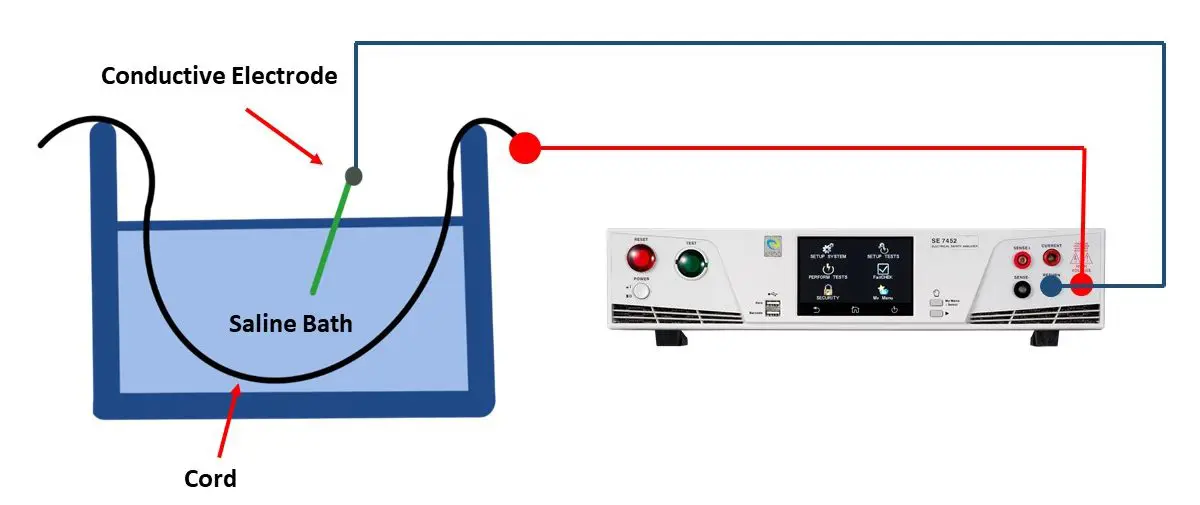
Figure 5. Hipot Test Configuration of Accessory (Except Handle and Connectors)
The handles, electrodes, and connectors are usually wrapped in a porous cloth soaked in saline. This cloth shall cover the entire exterior surface of the handle and extend to the surface of the cord and the active electrode insulation. The midsection of the saline-soaked cloth is wrapped with metal foil. The return lead of the tester connects to the foil and the HV lead should connect to the active electrode simultaneously.
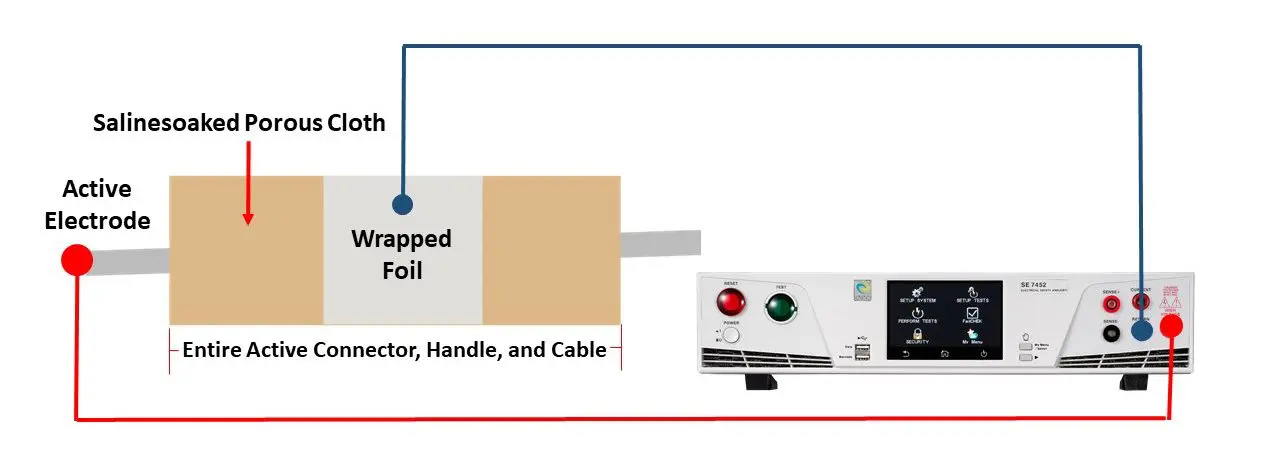
Figure 6. Hipot Test Configuration of Handle and Connectors
To conduct the Hipot test for the active accessories, the testing voltage is rated accessory voltage + 1000V. It can up to 10kV or even higher. If the insulation breakdown or flashover occurs, the Hipot test consider fail. Every accessories are designed differently, always check with eec sales for application details.
The Right Hipot Test Solution for Your Products
The Hipot test configuration can be different from products, but the ultimate goal is the same – safety. Besides setting up the configuration, choosing the right safety tester is equally important. Therefore, most manufacturers choose the high accuracy - EEC SE series Electrical Safety Analyzer. The advanced ARC detection and true negative voltage with a maximum 500VA output capacity are ideally suited to the demanding environment of today’s industrial settings.
In issue 6, we introduced the HF electrosurgical instrument is required to withstand up to 8kVac. The testing voltage is beyond the normal range and increases the test difficulty and risk. The 7470 Series High Withstand Voltage Tester makes the test become easier and safer because it provides up to 20kV, and comes with Ramp High and smart GFI functions. The ultra-high test voltage would generate a large current and determine a wrong result. Ramp High can avoid the misjudgment and increase test efficiency. Smart GFI function disables all relevant circuits when detects an excessive amount of leakage current flow to the ground. Protecting the operator from high voltage electric hazards.
Ikonix has more than 80-years of industry experience. We have worked with many leading companies. And helped them to ensure they deliver the highest quality and safe product to the customers. If you would like to know more about the right Hipot test solution for your product, simply contact our sales representative.
FAQ
Q: What is a Hipot test and why is it required?
A: A Hipot (dielectric withstand) test applies a high voltage to a product's insulation to verify it can safely block current from reaching accessible parts. It's required by virtually all electrical safety standards, since insulation failure can cause electric shock or even death during normal use.
Q: How does Hipot testing differ between Class I and Class II products?
A: Class I products have a 3-prong plug with a ground connection — the tester's HV lead connects to the shorted line and neutral prongs, while the return lead connects to ground. Class II products have only 2 prongs and no ground, so the return lead instead connects to a sheet of aluminum foil wrapped around the device's chassis to create the conductive return path.
Q: How is the Hipot test performed on active accessories, like HF surgical instruments?
A: Per standards such as IEC 60601-2-2, the insulated sections of active accessories (except the handle and connectors) are first preconditioned by soaking in saline for 12 hours. The cord insulation is then immersed in a saline bath, with the HV lead connected to an electrode in the bath and the return lead connected to the cord's conductors; handles and connectors are wrapped in saline-soaked cloth with metal foil providing the return connection.
Q: What test voltage is used for active accessory Hipot testing?
A: The test voltage equals the accessory's rated voltage plus 1000V, and can reach 10kV or higher depending on the device. Insulation breakdown or flashover at this voltage counts as a test failure.
Q: What is the difference between hipot testing and insulation resistance testing?
A: Hipot testing applies a high voltage and checks that leakage current stays under a limit. Insulation resistance testing applies a lower DC voltage and measures the actual resistance value of the insulation, giving a quantitative reading rather than a pass/fail result. The two are often performed together as complementary checks.
Q: Is a hipot test AC or DC?
A: It depends on the product and governing standard. AC is more common for general compliance testing. DC is often preferred when the DUT has significant capacitance, since AC current would otherwise include a capacitive charging component that can produce a misleadingly high leakage reading.
Q: How long does a hipot test take?
A: Design-verification testing is commonly run with a 1-minute dwell time at full test voltage. Production-line testing typically uses a much shorter dwell to keep up with manufacturing throughput, using a tester capable of fast, repeatable ramp and dwell control.

