


Electronic component testing is becoming more demanding as AI infrastructure pushes power systems to higher voltages. The rapid advancement of Generative AI and Large Language Models (LLMs) is driving continued growth in the computational requirements and power consumption of AI servers. This trend is accelerating the development of data centers toward higher power density and greater energy efficiency.
As the power consumption per rack continues to increase, traditional Alternating Current (AC) power distribution is facing growing challenges in power conversion efficiency and thermal management. In comparison, High Voltage Direct Current (HVDC) power distribution can reduce the number of AC/DC conversion stages, minimize distribution losses, and improve overall power delivery efficiency. As a result, HVDC is increasingly emerging as a key power distribution architecture for next-generation AI data centers.
HVDC Systems and Dielectric Withstand Testing
The implementation of HVDC systems relies on high-power semiconductor technologies, including power devices based on silicon (Si), silicon carbide (SiC), and gallium nitride (GaN), to enable high-efficiency power conversion and power management. As a result, the demand for high-performance computing driven by AI servers, the improved power delivery efficiency enabled by HVDC, and the critical technological support provided by high-power semiconductors together form an important technology chain for the advancement of AI infrastructure.
Against this backdrop, the Dielectric Withstand Test (also known as the Hipot Test) has become an important validation requirement for AI server power systems, HVDC equipment, and high-power semiconductor modules. In accordance with applicable safety regulations and product standards, the Dielectric Withstand Test applies a specified test voltage higher than the rated operating voltage to verify whether the equipment’s insulation system can withstand the resulting electrical stress without dielectric breakdown or flashover. This testing is essential for ensuring the safety and reliability of products during long-term operation.
The applicable regulations, standards, and test requirements are summarized below.
- IEC 62477-1 Safety requirements for power electronic converter systems and equipment – Part 1: General
- IEC 60664-1 Insulation coordination for equipment within low-voltage supply systems – Part 1: Principles, requirements and tests
- UL 1557 Standard for Electrically Isolated Semiconductor Devices
- IEC 61071 Capacitors for power electronics
- IEC 60747-17 Semiconductor devices – Part 17: Magnetic and capacitive coupler for basic and reinforced insulation
| Standard | IEC 62477-1 | UL 1557 | IEC 60664-1 | IEC 61071 | IEC 60747-17 |
| Hipot voltage | AC: 4400V DC: 6220V | 1.414 x rating isolation voltage | 15KV | 1.5 x V for ACW 2.5 x V for DCW | According to the manufacturer’s declaration |
| Test time | 60s | 60s | 60s | 10s | 60s |
| Pass Condition | No Breakdown | No Breakdown | No Breakdown | No Breakdown | No Breakdown |
| IR voltage | – | – | 500V | – | 500V |
| Test time | – | – | 60s | – | 60s |
| Pass Condition | – | – | – | – | 109Ω |
| GB current | 2 x rating current | – | – | – | – |
| Test time | 120s | – | – | – | – |
| Pass Condition | 0.1Ω | – | – | – | – |
| Touch Current | Rated input voltage | – | – | – | – |
| Pass Condition | ≤ 0.5 mA AC | – | – | – | – |
| MD | IEC 60990 Fig4 | – | – | – | – |
As product quality requirements continue to become more stringent, testing of passive components and power devices is no longer limited to basic electrical performance verification. Instead, it is increasingly evolving toward reliability testing under higher voltages and more demanding conditions. To enhance product quality and reduce potential failure risks, many manufacturers are progressively increasing test voltages and strengthening validation criteria. This evolution, however, also presents several common challenges:
High-Voltage Insulation Testing Requirements
With the growing adoption of high-voltage components, dielectric withstand testing has become an essential part of quality verification. Depending on the specifications of the component under test, the test voltage can reach up to 20 kVDC. Test equipment must therefore provide stable high-voltage output and reliable measurement capabilities to meet increasingly stringent product validation requirements.
Insufficient Test Data Traceability
Test data is often not centrally stored or automatically recorded, requiring manual compilation for quality traceability and safety compliance verification. This not only reduces operational efficiency but also limits the effectiveness of quality data analysis and continuous improvement initiatives.
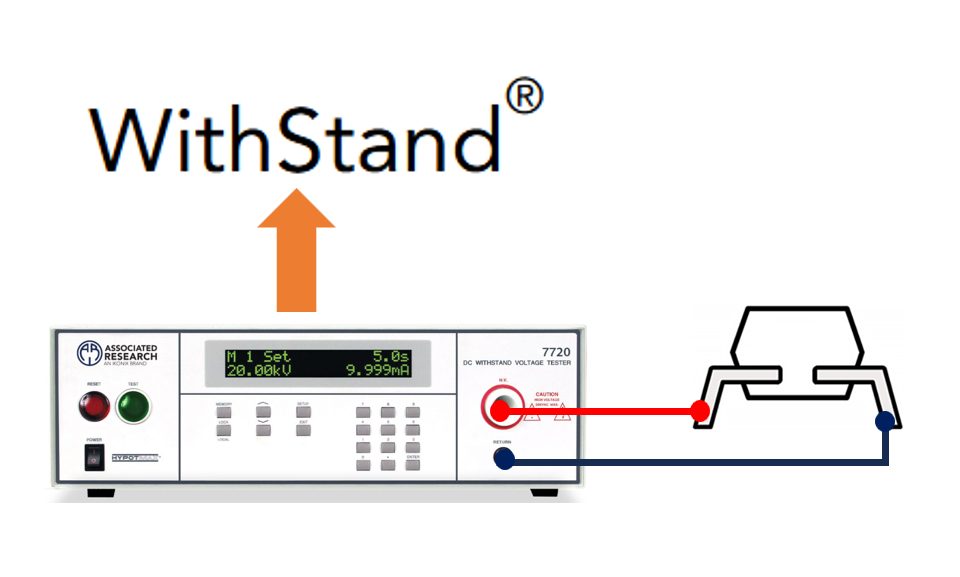
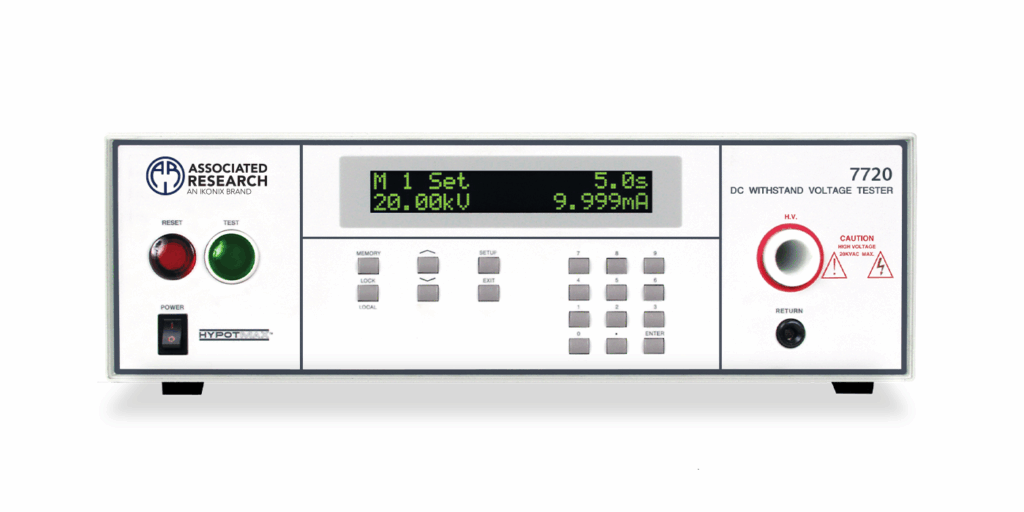
- 20 kVDC High-Voltage Output: The HypotMAX 7720 provides a maximum output voltage of 20 kVDC, meeting the insulation testing requirements of high-voltage applications.
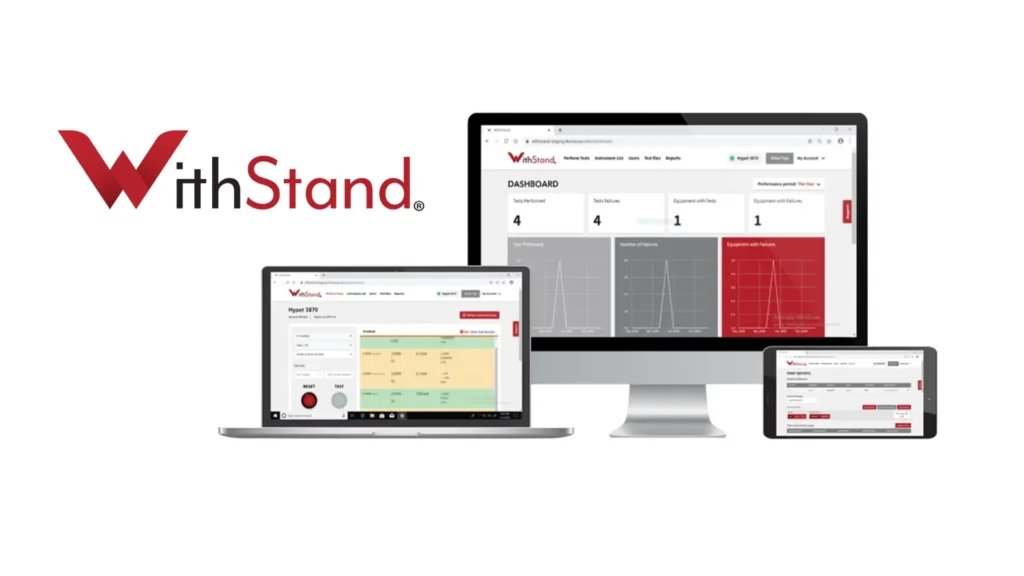
- Automated Test Data Management: The WithStand control software automatically stores test data and supports barcode scanning to quickly retrieve the corresponding test file and initiate testing. This streamlined workflow reduces manual intervention and helps minimize the risk of human error.
Component Testing Solution Advantages: Balancing Efficiency and Flexibility
Meeting the Testing Requirements of High-Voltage Components
The HypotMAX 7720 provides a maximum output voltage of 20 kVDC, supporting dielectric withstand testing for components with various specifications. This enables manufacturers to establish a reliable high-voltage validation process that meets stringent quality requirements.
Improving Test Efficiency and Consistency
Combined with the WithStand control software, the system can automatically execute test procedures and store test results. By reducing manual intervention, it helps minimize misjudgments and human errors, while improving overall testing efficiency and consistency.
Establishing Comprehensive Test Traceability
Test data can be automatically recorded and linked to barcodes, facilitating product history management, quality traceability, and safety compliance audits. This significantly reduces the need for manual data compilation and improves the efficiency of quality management processes.